.png)
.png)
.png)

A Practical 5-Step Guide to the Danfoss OMV Service Manual: Expert Tips for 2025
Dezember 25, 2025
Abstrakt
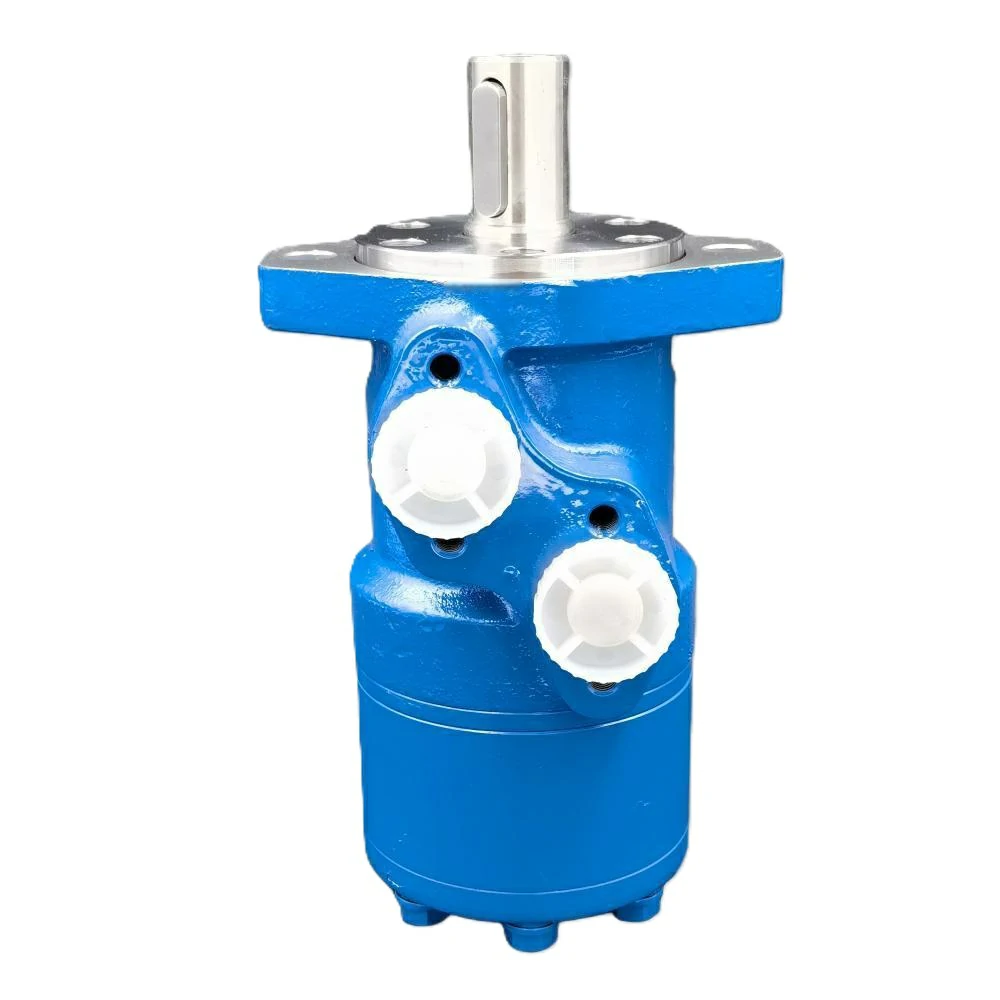
This guide provides a comprehensive examination of the Danfoss OMV service manual, transforming it from a dense technical document into an accessible, practical tool for maintenance and repair. The analysis is presented through a five-step framework designed for technicians and operators, particularly those in demanding industrial, agricultural, and mobile applications. It begins by establishing a foundational understanding of the manual's layout and the motor's technical specifications. The subsequent steps focus on applying this knowledge to diagnose common operational failures, such as torque loss and hydraulic leaks, by interpreting troubleshooting charts and diagrams. A detailed procedural walkthrough for a critical maintenance task, shaft seal replacement, is provided to illustrate the manual's practical application. The guide further explains how to accurately identify and source replacement parts using exploded-view diagrams and part lists, a crucial step for ensuring equipment longevity. Finally, it outlines preventative maintenance strategies based on the manual’s recommendations for fluid selection and service intervals, aiming to enhance the operational lifespan of Danfoss OMV series hydraulic motors.
Wichtigste Erkenntnisse
- Decode your motor's nameplate to identify the exact Danfoss OMV service manual needed.
- Use the manual's troubleshooting charts to diagnose torque loss and irregular speed issues.
- Follow exploded-view diagrams for precise disassembly and reassembly during repairs.
- Verify part numbers in the manual before ordering to ensure compatibility and avoid delays.
- Adhere to the specified hydraulic fluid type and cleanliness standards to prevent premature wear.
- Implement the recommended maintenance schedule to maximize the motor's operational lifespan.
Inhaltsübersicht
- A Foundational Guide to Your Service Manual
- Diagnosing Common Failures with the Manual as Your Guide
- Executing a Critical Repair: A Step-by-Step Walkthrough
- The Art of Part Identification and Sourcing
- From Reactive to Proactive: Long-Term Motor Care
- Häufig gestellte Fragen (FAQ)
- Schlussfolgerung
- Referenzen
A Foundational Guide to Your Service Manual
Before a single tool is picked up or a bolt is turned, the most powerful asset in any repair is understanding. The Danfoss OMV service manual can feel like an imposing document, filled with tables, diagrams, and technical language. Let us approach it not as a list of instructions, but as a map. It is a map that details every contour, pathway, and landmark of your hydraulic motor. Our first step is to learn how to read this map, to understand its language, so that when you are faced with a challenge in the field—whether on a farm in Southeast Asia or a mining site in South Africa—you can navigate with confidence. This initial orientation is perhaps the most vital part of the entire service process.
Decoding Your Motor's Nameplate
Every Danfoss OMV motor carries a small metal plate, its birth certificate. This nameplate is the key that unlocks the correct documentation and parts. Trying to service a motor without correctly identifying it is like trying to find a house in a city without knowing the address. The information here is precise and non-negotiable.
You will typically find a model code, a product number, and a date code. The model code itself is a language. For instance, a motor might be labeled "OMV 500." The "OMV" identifies the motor series, known for its robust construction and high torque capabilities, often featuring a roller-type gerotor set for enhanced efficiency and durability. The number, "500," refers to the motor's specific displacement in cubic centimeters per revolution (cm³/rev). This single value tells you the volume of hydraulic fluid required to turn the motor's output shaft one full rotation. A larger number means a larger displacement, which generally translates to higher torque at a lower speed.
Imagine two motors, an OMV 315 and an OMV 800. The OMV 800 will produce significantly more turning force (torque) but will spin slower than the OMV 315 if both are supplied with the same hydraulic fluid flow rate. Understanding this fundamental relationship, which is defined right on your nameplate, is the first step in diagnosing performance issues. Is your machine moving too slowly? Perhaps the flow from your electric hydraulic pump is insufficient for the motor's displacement, a fact you can verify by comparing the pump's output to the motor's requirements listed in the manual.
Navigating the Manual's Structure
Once you have identified your motor and secured the correct Danfoss OMV service manual, take a moment to familiarize yourself with its layout. Most Danfoss manuals follow a logical, standardized structure.
- Safety Precautions: This section should always be read first. It contains critical warnings about hydraulic pressure, fluid temperatures, and proper lifting procedures. Ignoring these can lead to serious injury.
- Technische Daten: Here you will find the motor's vital statistics. This section is your primary reference for performance data.
- Einbau: This provides guidance on mounting the motor, connecting hydraulic lines, and, crucially, the proper setup of the case drain line.
- Fehlersuche: This is a diagnostic guide, often presented as a chart, linking symptoms (e.g., "motor does not rotate") to potential causes and remedies.
- Disassembly and Assembly: These are the heart of the repair instructions, featuring detailed, step-by-step procedures often accompanied by exploded-view diagrams.
- Parts List: This section contains the official part numbers for every single component, from the main housing to the smallest O-ring.
Think of these sections as chapters in a story. You would not start a book in the middle; likewise, you should approach the manual with a sense of order. The technical specifications provide the context for the troubleshooting section, which in turn guides you to the correct repair procedure in the disassembly/assembly section.
Key Technical Specifications and What They Mean for You
The technical data table is the most information-dense part of the manual. Let us demystify some of the key parameters you will encounter.
| Parameter | Unit | What It Means in Practice |
|---|---|---|
| Verdrängung | cm³/rev (or in³/rev) | The volume of fluid needed for one shaft rotation. It is the primary determinant of motor speed and torque. |
| Max. Continuous Pressure | bar (or PSI) | The highest pressure the motor can handle for extended periods without risking damage. Exceeding this leads to internal wear. |
| Max. Intermittent Pressure | bar (or PSI) | The peak pressure the motor can tolerate for brief moments (e.g., during startup or load spikes). |
| Max. Continuous Torque | Nm (or lb-in) | The maximum turning force the motor can produce continuously. This dictates the motor's "strength." |
| Max. Continuous Speed | RPM | The fastest the output shaft should spin for long durations. Running faster can cause excessive heat and wear. |
| Max. Back Pressure | bar (or PSI) | The maximum pressure allowed in the motor's outlet line. Exceeding this can blow out the shaft seal. |
This table is not just a collection of numbers; it defines the motor's operational boundaries. For example, if your application requires 300 Nm of torque, but your pressure gauge shows the system is running at a pressure that, according to the manual, only generates 250 Nm for your specific OMV model, you have already narrowed down the problem. The issue might not be the motor itself but the pressure supplied by the system's elektrische Hydraulikpumpe. A profound understanding of these specifications shifts your perspective from a reactive repairer to a proactive diagnostician.
Diagnosing Common Failures with the Manual as Your Guide
When a piece of heavy machinery grinds to a halt, the pressure to find a solution is immense. Downtime is costly, and guesswork can make a bad situation worse. This is where the Danfoss OMV service manual transitions from a reference document to an active diagnostic partner. The troubleshooting section is your first line of defense, a logical flowchart designed to guide your thinking from symptom to cause. Let us explore how to use it to decipher some of the most common ailments that can afflict these powerful hydraulic motors.
Symptom: Loss of Torque or Power
Your machine feels weak. The conveyor belt struggles under load, the winch cannot lift its rated capacity, or the wheels of a vehicle lack the force to climb a grade. This loss of torque is a common complaint. Before you begin disassembling the motor, turn to the troubleshooting chart in your service manual.
The manual will likely prompt a sequence of checks, starting with the simplest and least invasive.
- Check the Hydraulic Fluid: Is the fluid level in the reservoir adequate? Is the fluid viscosity correct for the operating temperature? Fluid that is too thin (often due to overheating) can cause internal leakage within the motor, reducing its ability to generate pressure and, therefore, torque. The manual specifies the recommended viscosity grades (e.g., ISO VG 32, 46, or 68).
- Verify System Pressure: Connect a pressure gauge to the motor's inlet port. With the system running and the motor under load, does the pressure match the application's requirements? The manual's performance data will show you the torque output at various pressures. If the pressure is low, the problem lies upstream—perhaps with the pressure relief valve setting or the performance of the main hydraulic pump.
- Inspect for External Leaks: While obvious, a significant leak in a hose or fitting can divert flow that would otherwise power the motor.
- Consider Internal Wear: If the external checks reveal no issues, the manual will point toward internal motor problems. The primary culprit for gradual torque loss is wear in the gerotor set (the heart of an orbit motor) or the valve plate. Pressurized fluid "leaks" past these worn components from the high-pressure side to the low-pressure side, a phenomenon known as "blow-by." This internal leakage means less effective pressure is applied to generate rotation, resulting in diminished torque. The only remedy for significant internal wear is a rebuild or replacement.
By following this logical progression, you use the manual to avoid prematurely blaming the motor for a system-level problem, saving considerable time and effort.
Symptom: Leaks and Seal Failure
A puddle of hydraulic fluid under a machine is an undeniable sign of trouble. The Danfoss OMV service manual provides crucial information for diagnosing the source and cause of leaks, particularly those from the shaft seal.
The shaft seal is a small but critical component that prevents fluid from escaping along the output shaft. When it fails, the cause is often not a faulty seal but an external problem. The manual helps you investigate this.
- Check Case Drain Line Pressure: The OMV series, like most orbit hydraulic motors, has a dedicated housing (or "case") that collects small amounts of internal leakage. This fluid must be allowed to return to the reservoir with minimal resistance through a dedicated "case drain" line. The manual specifies a maximum allowable case pressure (or back pressure). If this line becomes blocked, kinked, or is improperly connected to a pressurized return line, pressure builds up inside the motor housing. This pressure will quickly overwhelm the shaft seal and force it to fail. Your manual will have a diagram showing the correct installation of the case drain port.
- Inspect the Shaft and Bearing: A bent shaft or a worn output shaft bearing can cause the shaft to wobble or "run out." This eccentric motion will quickly destroy even a brand-new seal. The manual provides specifications for maximum shaft runout.
- Examine for Contamination: Abrasive particles in the hydraulic fluid can score the shaft surface, creating a rough path for fluid to escape past the seal. The manual emphasizes fluid cleanliness standards (usually an ISO 4406 code) for this very reason.
A leaking motor is not just a mess; it is a symptom. Using the service manual to understand the forces acting on the shaft seal allows you to fix the root cause, not just replace the failed component.
Symptom: Irregular Speed or Stalling
The motor's rotation is jerky, it hesitates, or it stalls completely under a light load. This erratic behavior can be frustrating and dangerous. The troubleshooting guide in your Danfoss OMV service manual will provide a path to clarity.
- Luft im System: Air bubbles compressing and decompressing in the hydraulic fluid can cause jerky and spongy motor operation. The manual will advise on proper bleeding procedures for the hydraulic system after a repair or fluid change.
- Contamination in the Motor: A piece of debris (like a metal shaving or a fragment of a failed component elsewhere in the system) can temporarily jam the commutation valve or the gerotor set. This can cause the motor to stall or "cog." Flushing the system and the motor, as outlined in service documentation, may resolve the issue. In severe cases, disassembly and cleaning are required.
- Worn Commutation Valve or Drive Link: The OMV motor uses a valve to distribute fluid to the correct chambers of the gerotor set to create rotation. The drive link connects the gerotor's orbital motion to the output shaft. Severe wear on these components can disrupt the timing of the fluid distribution, leading to inefficient rotation and stalling at low speeds. The exploded-view diagrams in the manual are essential for identifying these parts during an inspection.
- Insufficient Flow: At very low speeds, the effects of internal leakage become more pronounced. If the flow from the pump is barely enough to overcome this leakage, the motor may struggle to rotate smoothly. Cross-referencing the pump's flow rate with the motor's displacement and volumetric efficiency (a measure of how well it seals internally, often found in advanced datasheets) can help diagnose this.
By methodically working through these possibilities, guided by the structure of the service manual, you transform a chaotic situation into a systematic investigation.
Executing a Critical Repair: A Step-by-Step Walkthrough
Theory and diagnosis are indispensable, but the true test of your understanding comes when you must intervene directly. Let us transition from interpreting the Danfoss OMV service manual to using it as a direct guide for a common and critical repair: replacing the main shaft seal. This procedure is more than just swapping a part; it is a delicate operation where precision and cleanliness are paramount. We will walk through this process together, imagining the manual is open on the bench next to us, its diagrams and torque values guiding our hands.
Tools and Preparation
Before we begin, the manual will implicitly and explicitly call for preparation. A successful repair is born from a clean and organized workspace.
- Gather Your Tools: You will need a set of metric wrenches or sockets, retaining ring pliers, a soft-faced mallet, a seal puller (or a small pry bar used with extreme care), and a torque wrench.
- Prepare the New Parts: Unpack your new shaft seal kit. It will likely contain the main seal, an O-ring, and perhaps a dust seal. Inspect them to ensure they are clean and free of defects. The manual's parts list is your confirmation that you have the correct kit for your specific OMV model.
- Clean the Motor: Thoroughly clean the exterior of the motor, especially around the output shaft and mounting flange. You want to prevent any dirt or grime from entering the motor's internals during disassembly. This is a non-negotiable step.
- Drain the Fluid: If possible, drain the hydraulic fluid from the motor housing by positioning it with the ports facing down.
Step-by-Step Disassembly
With our preparation complete, we turn to the disassembly section of the manual. It will feature an exploded-view diagram, our visual guide for the operation.
- Secure the Motor: Firmly clamp the motor in a vise, using soft jaws to avoid marring the housing. Position it so the output shaft is facing you.
- Remove the Shaft Retaining Ring: Looking at the diagram in the manual (let's call it Figure 5-A), you will see a retaining ring or snap ring located in a groove on the output shaft. Using your retaining ring pliers, carefully compress or expand the ring (depending on its type) and slide it off the shaft.
- Remove Washers or Spacers: The diagram will show any washers or spacers that sit behind the retaining ring. Remove them and set them aside in the order they came off. This order is critical for proper reassembly.
- Extract the Old Shaft Seal: Now we come to the old seal. It is pressed into the motor's end cap. Some motors may have a dust seal on the outside, which can be pried out first. To remove the main shaft seal, you can use a dedicated seal puller. If one is not available, you can carefully use a small, flat-head screwdriver to pry it out. The key is to lever against the metal body of the seal, not the delicate sealing lip, and to be extremely careful not to scratch the seal bore (the machined surface of the housing where the seal sits). A scratch here will create a new leak path.
- Inspect the Seal Bore and Shaft: Once the old seal is out, clean the bore with a lint-free cloth. Run your finger around the inside of the bore and along the sealing surface of the shaft. Do you feel any scratches, burrs, or corrosion? The manual specifies a smooth, clean surface. Any damage must be polished out with very fine emery cloth before proceeding. This inspection is where many hurried repairs fail.
The Art of Seal Installation
Installing the new seal is the most delicate part of the job.
- Lubricate Everything: The manual will emphasize lubrication. Apply a thin coat of clean hydraulic fluid or a dedicated seal lubricant to the outer diameter of the new seal and the inner sealing lip. Also, apply a light coat to the seal bore in the motor housing and the shaft itself. This lubrication prevents the seal from tearing or folding during installation.
- Position the Seal: The shaft seal is directional. It has a spring-loaded "lip" that must face the direction of the pressure—in this case, inward, toward the hydraulic fluid inside the motor. The manual's diagram will show the correct orientation. Place the seal squarely into the bore.
- Press the Seal In: The best method is to use a seal driver or a large socket that matches the outer diameter of the seal. This ensures even pressure is applied to the seal's sturdy metal casing. Gently tap the driver with a soft-faced mallet until the seal is fully seated in the bore. It should be flush with or slightly recessed below the face of the housing, as shown in the manual's cross-section diagram. Never strike the seal directly with a hammer.
- Reinstall Dust Seal and Hardware: If your motor has a separate dust seal, install it now. Then, replace the washers and spacers in the correct order and reinstall the shaft retaining ring, ensuring it clicks securely into its groove.
Reassembly and Testing
Your repair is not complete until it is tested. Reinstall the motor on the machine, reconnecting the hydraulic lines. Before starting the main system, if possible, fill the motor housing with clean hydraulic fluid through the case drain port. This ensures the bearings and seal are lubricated from the very start.
Start the hydraulic system at low pressure and low speed. Watch the newly installed seal for any signs of leakage. Cycle the motor back and forth. If all is well, you can gradually bring the system up to normal operating speed and pressure. Your careful, methodical work, guided by the Danfoss OMV service manual, has resulted in a successful, reliable repair.
The Art of Part Identification and Sourcing
A hydraulic motor, for all its power, is a collection of precisely engineered components. When one of these components fails, the success of the repair hinges on obtaining an exact replacement. This is not a place for "close enough." Using the wrong part, even a seemingly insignificant O-ring, can lead to immediate failure, compromise the performance of other reliable Orbit-Hydraulikmotoren, or cause a safety hazard. The Danfoss OMV service manual is the definitive catalog for your motor, providing the clarity needed to source parts with absolute confidence.
Reading Exploded-View Diagrams
The "Disassembly and Assembly" and "Parts List" sections of your manual will feature one of the most useful illustrations in technical documentation: the exploded-view diagram. This drawing shows the motor as if its components are suspended in space, separated but in their correct assembly order. It is a visual map of the motor's anatomy.
Each component in the diagram is assigned an item number. This number is your link between the picture and the part number. For example, the output shaft might be labeled as item #1, the main housing as item #2, the seal kit as item #15, and the set of bolts holding the motor together as item #20.
Take some time to study this diagram. It does more than just identify parts; it shows their relationships. You can see how the drive link (item #10) fits into the gerotor star (item #8), and how the commutation valve (item #6) sits between the gerotor and the end cap (item #4). This understanding is invaluable during both disassembly and reassembly, helping you visualize how the motor comes apart and, more importantly, how it goes back together.
Cross-Referencing Part Numbers
Once you have identified the item number of the part you need from the exploded view, you turn to the corresponding parts list table in the manual. This table is the bridge from a visual component to an actionable order number. It will typically contain several columns of information.
| Item No. | Part Number | Description | Qty. | Notes |
|---|---|---|---|---|
| 1 | 151F0101 | Shaft, Ø32 Tapered | 1 | |
| 2 | 151F0202 | Housing, OMV 500 | 1 | |
| 8 | 151F0308 | Gerotor Set, 500 cm³ | 1 | Includes items 8a and 8b |
| 15 | 151F0115 | Seal Kit | 1 | For standard shaft |
| 20 | 98110020 | Bolt, M12x80 | 7 | Torque to 110 Nm |
Here is how you use this table effectively:
- Find your Item Number: Locate the item number from the diagram in the first column.
- Identify the Part Number: The "Part Number" column gives you the exact, unique identifier for that component. This is the number you will use when contacting a supplier.
- Verify the Description: The "Description" confirms you are looking at the right part and often provides critical details (e.g., "Shaft, Ø32 Tapered"). This helps differentiate between variations. An OMV motor might be available with several different shaft types (splined, keyed, tapered), and the description will clarify which part number corresponds to which type.
- Check the Quantity: The "Qty." column tells you how many of that item are used in a single motor assembly. This is especially important for items like bolts or seals.
- Read the Notes: The "Notes" column is for crucial extra information. It might indicate that a part is part of a kit (like the "Seal Kit"), specify a required torque value for bolts, or alert you to a design change.
This methodical process of cross-referencing eliminates ambiguity. You are no longer asking for "the seal for an OMV motor"; you are requesting "part number 151F0115," an order that can be fulfilled with precision.
Avoiding Common Pitfalls
Even with the manual, there are potential traps for the unwary.
- Version Changes: Manufacturers sometimes update designs over the motor's production life. A motor made in 2025 might have slightly different internal parts than one made in 2015. The service manual is usually version-specific. Always try to match the manual to your motor's serial or date code. If in doubt, a reputable supplier can often use your motor's full model code to ensure you get the correct revision of the part.
- Kits vs. Individual Parts: For common jobs like a reseal, the manufacturer provides a "Seal Kit" that contains all the necessary O-rings, washers, and seals. It is almost always better to buy the kit than to try and source each tiny component individually. The kit ensures compatibility and often represents better value.
- "Will-Fit" vs. Genuine Parts: The market is full of non-genuine or "will-fit" parts. While they may be cheaper, they are not manufactured to the same precise tolerances or from the same quality materials as genuine Danfoss components (Danfoss, 2021). An out-of-spec part can compromise the efficiency, reliability, and safety of your motor. The part numbers in your service manual are for genuine parts; it is wise to use them.
By mastering the art of part identification using your service manual, you take control of the repair process, ensuring that the components you install will restore your motor to its original performance and reliability standards.
From Reactive to Proactive: Long-Term Motor Care
A repair, no matter how well executed, is a reactive measure. It is a response to a failure that has already occurred, resulting in costly downtime. The ultimate goal for any equipment owner or operator is to move from a reactive to a proactive maintenance strategy. The Danfoss OMV service manual is not just a repair guide; it is also a blueprint for longevity. It contains the essential knowledge needed to extend the life of your motor and prevent failures before they happen. This final step is about embedding the manual's wisdom into your daily and long-term operational practices.
The Importance of Hydraulic Fluid
If the gerotor set is the heart of the motor, then the hydraulic fluid is its lifeblood. The manual dedicates a significant section to fluid recommendations for a reason: over 70% of hydraulic system failures can be traced back to the condition of the hydraulic fluid (GlobalSpec, n.d.). The manual provides three critical parameters for this fluid.
-
Viskosität: This is a measure of the fluid's thickness. The manual will specify a recommended viscosity grade (e.g., ISO VG 46) and an acceptable range based on operating temperature.
- If the fluid is too thin (low viscosity): It cannot maintain an effective lubricating film between moving parts, leading to accelerated wear. It also increases internal leakage, reducing motor efficiency.
- If the fluid is too thick (high viscosity): It can cause sluggish operation, increase heat generation, and may not flow properly into tight clearances, leading to lubricant starvation. You must select a fluid that maintains the correct viscosity at your machine's typical working temperature.
-
Fluid Type: The manual will recommend high-quality, petroleum-based hydraulic oils with anti-wear (AW) additives. It will also provide guidance on using special fluids like fire-resistant or biodegradable types, which may require adjustments to operating parameters.
-
Cleanliness: This is perhaps the most critical and often overlooked factor. The manual will specify a maximum contamination level using the ISO 4406 cleanliness code (e.g., 20/18/15). This code represents the number of particles of different sizes in a sample of fluid. Contaminants like dirt, water, and metal particles act as an abrasive slurry, grinding away at the motor's precise internal components. Regular filter changes and proper fluid handling practices are essential to meet the cleanliness standard prescribed in the manual.
Creating a Maintenance Logbook
The service manual provides a recommended schedule for maintenance tasks. This schedule is your foundation for a proactive maintenance program. Instead of relying on memory, create a physical or digital logbook for each machine.
Your logbook should track:
- Operating Hours: The primary metric for scheduling maintenance.
- Fluid and Filter Changes: Record the date and operating hours of every hydraulic filter and fluid change. Your manual will recommend intervals, such as "replace hydraulic filter every 500 hours."
- Flüssigkeitsanalyse: Many operations in mining and heavy industry periodically send fluid samples to a lab for analysis. This can reveal hidden problems like excessive wear metals or water contamination long before they cause a catastrophic failure. Record the results in your logbook.
- Visual Inspections: Log regular checks for leaks, damaged hoses, and unusual noises.
- Repairs Performed: Detail any repairs, including the parts replaced.
This logbook transforms maintenance from an afterthought into a disciplined process. It provides a complete service history for the machine, which is invaluable for troubleshooting future problems and maximizing its resale value.
The Critical Role of the Case Drain Line
We touched on the case drain line when diagnosing seal leaks, but its importance for motor longevity cannot be overstated. The manual will have a clear diagram showing the case drain port, often labeled "T" or "L". This line allows the small, inevitable internal leakage from the motor to return to the tank under low pressure.
The manual insists on a dedicated, unrestricted line to the tank for two main reasons:
- Protecting the Shaft Seal: As discussed, a blocked case drain line will cause high pressure in the motor housing, destroying the shaft seal.
- Cooling and Lubrication: The flow of leakage oil through the case drain line helps to cool the motor and lubricate the shaft bearings.
The manual's instructions are clear: the case drain line must be connected directly to the reservoir, above the fluid level, and must not be teed into a pressurized return line. Regularly inspecting this line for kinks or blockages is one of the simplest and most effective preventative maintenance tasks you can perform. It is a small detail, specified in your manual, that has a massive impact on the long-term health of your hydraulic motors.
By embracing the principles of fluid management, scheduled maintenance, and correct installation as laid out in the Danfoss OMV service manual, you shift the balance of power. You are no longer just fixing what is broken; you are actively cultivating a reliable and durable hydraulic system.
Häufig gestellte Fragen (FAQ)
What does "OMV" in Danfoss OMV stand for?
While Danfoss does not officially define the acronym, in the context of their orbital motor series, the "OM" typically signifies "Orbital Motor." The "V" in OMV distinguishes it as a specific series, often characterized by a roller gerotor design (which Danfoss calls a Geroller set) and a disc valve, making it suitable for heavy-duty applications requiring high torque and long life.
Can I use a different brand of hydraulic fluid in my OMV motor?
Yes, but it must meet the specifications outlined in the Danfoss OMV service manual. The critical factors are not the brand name but the fluid's properties: viscosity grade (e.g., ISO VG 46), fluid type (usually a high-quality, petroleum-based oil with anti-wear additives), and cleanliness level (meeting the specified ISO 4406 code). Using a fluid that meets these requirements will not void the warranty or harm the motor.
What is the most common reason for Danfoss OMV motor failure?
The most prevalent cause of failure for most hydraulic motors, including the OMV series, is hydraulic fluid contamination. Abrasive particles in the fluid cause premature wear of the internal components, such as the gerotor set and valve plate, leading to increased internal leakage, loss of efficiency, and eventual failure. The second most common cause is often related to improper installation or operation, such as exceeding the maximum pressure or running with a blocked case drain line, which leads to shaft seal failure.
How do I find the correct Danfoss OMV service manual for my motor?
The best way is to use the full model code and product number from the motor's nameplate. You can search for this information on the official Danfoss Power Solutions website or contact an authorized distributor. Providing the complete number is crucial, as there can be different versions or configurations of the same basic motor model (e.g., OMV 500) that may require slightly different service information or parts.
What is the main difference between a Danfoss OMV and an OMT motor?
Both are high-torque, low-speed orbital motors, but they are designed for different scales of application. The OMV series is generally considered a heavy-duty motor. The OMT series is a step up, designed for even more demanding applications. OMT motors typically offer larger displacements (up to 500 cm³/rev or more), higher pressure ratings, and a more robust construction with larger bearings, allowing them to produce higher torque and handle greater side loads on the shaft. The choice between an OMV and OMT depends on the specific torque, speed, and durability requirements of the machine.
Schlussfolgerung
Navigating the complexities of hydraulic systems requires more than just mechanical skill; it demands a clear understanding of the components that drive them. The Danfoss OMV service manual, often perceived as a dense and intimidating document, is in reality a powerful tool of empowerment for any technician, engineer, or operator. By learning to interpret its structure, diagnose issues using its troubleshooting guides, execute precise repairs with its detailed procedures, and implement its recommendations for preventative care, you transform your relationship with the equipment. You move from being a reactive fixer of broken machinery to a proactive custodian of its long-term health and reliability. This guide has aimed to demystify that process, showing that with a methodical approach, the manual becomes an invaluable partner in reducing downtime, cutting costs, and maximizing the performance of your Danfoss OMV hydraulic motors in the demanding environments of 2025 and beyond.
Referenzen
Cat. (2021). Cat® hydraulic pumps & motors. Caterpillar. Retrieved from https://www.cat.com/en_ZA/support/maintenance/hydraulics/pumps-and-motors.html
DirectIndustry. (n.d.). Danfoss orbital hydraulic motors. Retrieved from https://www.directindustry.com/product-manufacturer/danfoss-orbital-hydraulic-motor-95107-4685.html
GlobalSpec. (n.d.). Hydraulic motor working principle. Retrieved from https://www.globalspec.com/pfdetail/motors/hydraulic-motor-working-principle
Hidraoil. (n.d.). Hydraulic motors orbital. Retrieved from https://www.hidraoil.com/products/standard/category/hydraulic-motors/orbital/
Hydro-pack. (n.d.). MR160C hydraulic orbit motor. Retrieved from https://www.hydro-pack.com/ProductDetail/Index/P1187-ms-mr160c-hydraulic-orbit-motor
XC Hydraulic. (2025, January 21). How to size a hydraulic pump and motor?. Retrieved from https://www.xchydraulic.com/how-to-size-a-hydraulic-pump-and-motor.html
ATO. (n.d.). Hydraulic motors. Retrieved from https://www.ato.com/hydraulic-motors