.png)
.png)
.png)

Gerotor vs. Geroler in Hydraulic Motors: What I See in Real Applications
Dezembro 19, 2025
When I talk about low-speed, high-torque hyd motors, two internal structures always come up: Gerotor and Geroler. On the surface, they look similar. Both use an internal gear set to convert hydraulic energy into torque. But in real hydraulic motor applications, they behave differently. I want to share how I understand these differences and how I choose between them in practice.
1. Basic structural difference
A Gerotor consists of two main parts:
an inner rotor with external teeth
an outer rotor with one extra internal tooth
The two parts mesh directly with each other. As oil enters the chambers formed between the teeth, pressure creates rotation and torque.
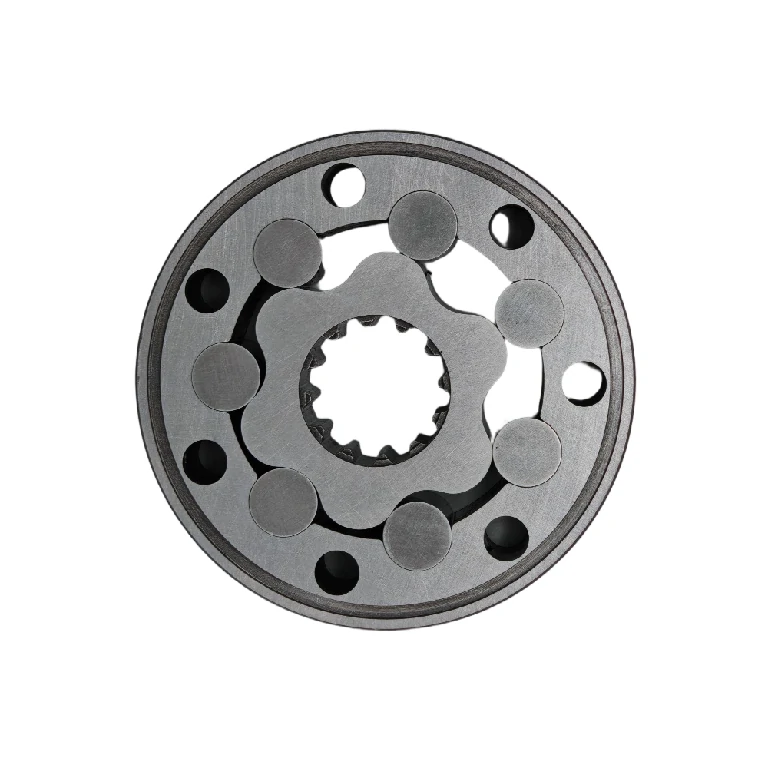
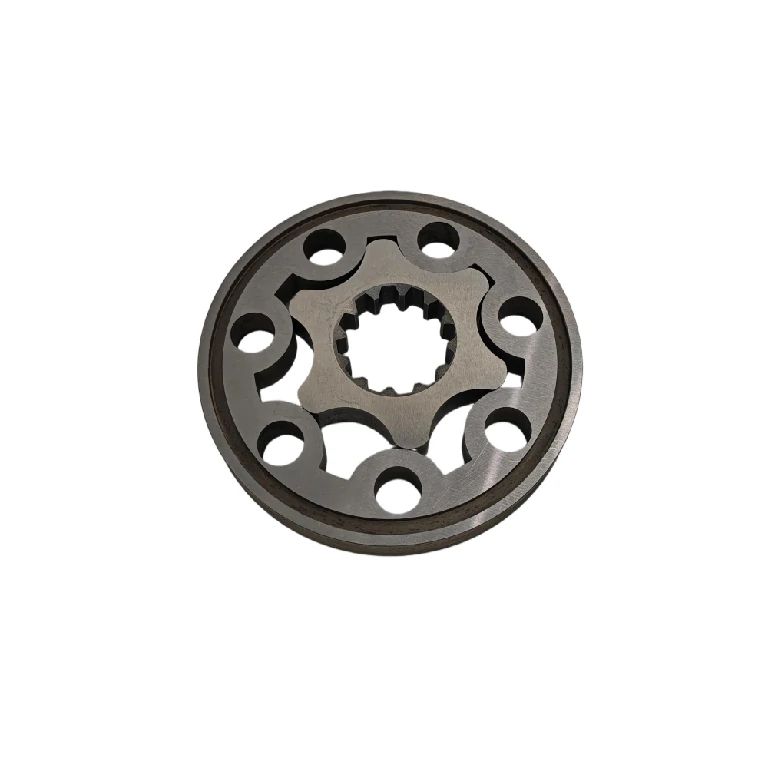
A Geroler builds on this design. It still uses an inner rotor, but instead of direct tooth contact, it adds rollers (usually cylindrical rollers) between the inner rotor and the outer ring. These rollers roll rather than slide during operation.
This single structural difference leads to several important performance changes.
2. Friction and wear behavior
In a Gerotor motor, the inner and outer rotors slide against each other. This sliding contact creates higher friction, especially under high pressure or continuous load. Over time, wear increases, and internal leakage grows.
In a Geroler motor, the rollers transform sliding friction into rolling friction. I see much less wear on the contact surfaces, especially in heavy-duty applications. This is one of the main reasons why Geroler motors usually achieve a longer service life.
3. Pressure capability and torque stability
From my experience, Gerotor motors work very well at medium pressure levels. They offer smooth operation and good efficiency in light to medium-duty systems.
However, when systems demand higher continuous pressure and higher torque, Geroler motors perform better. The rollers distribute the load more evenly, which allows the motor to handle higher pressure without rapid wear. Torque output also stays more stable over time.
This is why many heavy-duty orbital motors use Geroler sets rather than Gerotor sets.
4. Efficiency at low speed
Low-speed performance matters a lot in applications like conveyors, winches, and agricultural machinery.
Gerotor motors can run smoothly at low speed, but friction limits how slow they can go under load.
Geroler motors usually show better low-speed stability. The rolling contact reduces stick-slip behavior, so the motor rotates more smoothly at very low RPM. When customers ask me for excellent crawling performance, I almost always look at Geroler designs first.
5. Cost and manufacturing complexity
I also have to consider cost.
Gerotor sets have a simpler structure and fewer components. That makes them easier to manufacture and more cost-effective. For price-sensitive markets or compact systems, Gerotor motors make a lot of sense.
Geroler sets require higher machining accuracy and additional roller components. This increases production cost. However, in applications where durability and pressure capability matter more than initial cost, the extra investment pays off.
6. Typical application differences
Based on what I see in the market:
Gerotor motors commonly appear in:
1.compact hydraulic systems
2.light industrial equipment
3.auxiliary functions
4.cost-sensitive OEM designs
Geroler motors commonly appear in:
1.construction machinery
2.agricultural equipment
3.heavy conveyors
4.wheel drives and winches
Final thoughts
I don’t see Gerotor and Geroler as competitors. I see them as solutions for different working conditions.
If I need a compact, economical motor for moderate pressure, I choose Gerotor.
If I need long life, high pressure, and stable low-speed torque, I choose Geroler.
Understanding this difference helps me select the right hydraulic motor—and helps customers avoid problems before they appear.