.png)
.png)


Demystifying the Magic: An Expert Guide to Orbital Hydraulic Motor Animation & 3 Core Working Principles
November 12, 2025
Abstrakt
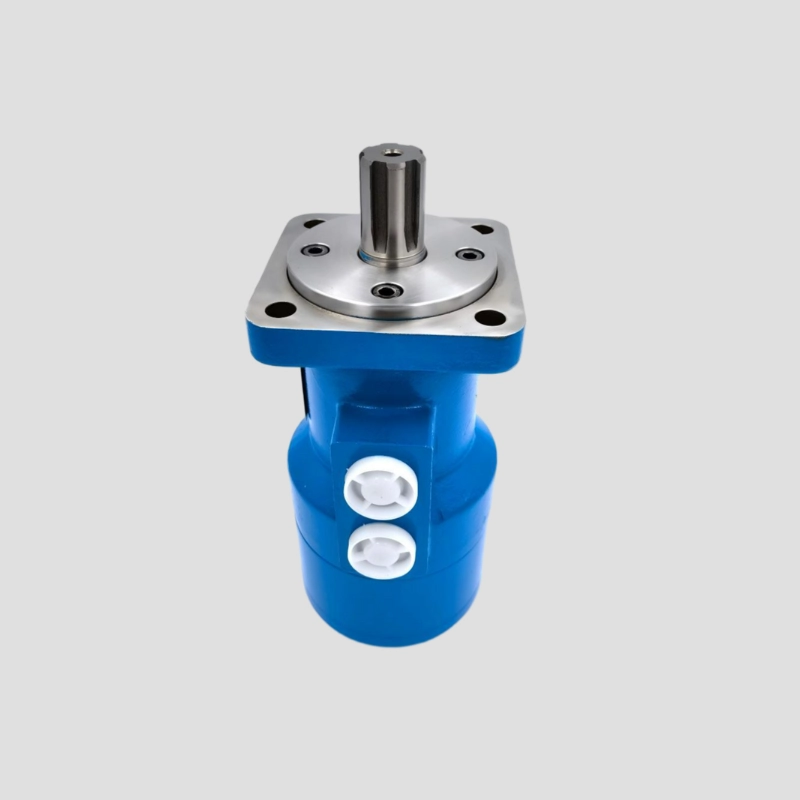
An orbital hydraulic motor is a type of low-speed, high-torque (LSHT) hydraulic motor that converts hydraulic energy into mechanical rotational energy. Its operation is predicated on the interaction between a fixed external gear (stator) and a rotating internal gear (rotor) that orbits eccentrically within the stator. This examination elucidates the core working principles by conceptualizing the process as an internal, continuous orbital hydraulic motor animation. Pressurized hydraulic fluid is sequentially directed into expanding volume chambers created between the two gears, forcing the inner rotor to orbit and rotate simultaneously. This combined motion is then transferred via a splined coupling to an output shaft, generating smooth and powerful rotational output. The unique cycloidal or epitrochoidal profile of the gearing, along with the mechanism of fluid distribution, allows for a high degree of torque multiplication within a compact physical envelope. This makes these motors exceptionally suited for heavy-duty mobile and industrial applications where direct drive is required without the need for additional gear reduction.
Wichtigste Erkenntnisse
- Visualize the internal mechanics as an orbital hydraulic motor animation to grasp the fluid flow.
- The eccentric motion of the inner rotor within the stator is what generates the output rotation.
- These motors excel at producing high torque at very low, smooth rotational speeds.
- Geroler sets use rollers to reduce friction and increase the motor's lifespan and efficiency.
- Proper fluid selection and filtration are paramount for reliable motor operation.
- Understand displacement to correctly size a motor for your torque and speed requirements.
Inhaltsübersicht
- A Conceptual Framework: Visualizing the Orbital Hydraulic Motor Animation
- Principle 1: The Heart of the Machine – The Gerotor and Geroler Set
- Principle 2: The Lifeblood – Pressurized Fluid Dynamics in Action
- Principle 3: Translating Motion – From Orbit to Usable Output Torque
- Practical Applications and Selection Criteria for Orbital Motors
- Häufig gestellte Fragen (FAQ)
- Schlussfolgerung
- Referenzen
A Conceptual Framework: Visualizing the Orbital Hydraulic Motor Animation
To truly appreciate the genius behind an orbital hydraulic motor, one must look beyond its simple, rugged exterior. The real magic happens inside, in a constant, fluid-driven dance of precisely engineered components. Thinking about the process as a continuous orbital hydraulic motor animation playing out in your mind is perhaps the most effective way to understand its function. It is not about a single static state but a dynamic, cyclical process of filling, pressuring, turning, and exhausting.
What is an Orbital Hydraulic Motor? A Primer for the Uninitiated
At its core, an orbital hydraulic motor, sometimes called an orbit motor or gerotor motor, is a mechanical actuator that converts the power of pressurized fluid into rotational mechanical power. Its defining feature, which sets it apart from many other types of motors, is its ability to generate a tremendous amount of torque (turning force) at a relatively low rotational speed. Imagine trying to turn a very large, heavy wheel by hand. You would need to apply a great deal of force to get it moving slowly. An orbital motor accomplishes this task effortlessly, making it a workhorse in demanding environments. These are the muscles behind the wheels of a skid-steer loader, the turning mechanism for a farming conveyor belt, or the power source for a ship's winch. They are a specific category of the broader family of hydraulic motors, which are all powered by fluid.
Why an "Animation" Mindset is Key to Understanding
A static diagram can only show a single moment in time. It might show a high-pressure chamber and a low-pressure chamber, but it cannot convey the seamless transition between them. This is why adopting an "animation" mindset is so powerful. Imagine you could shrink down and witness the inner rotor as it glides within the outer ring. You would see the pockets between the gear teeth swell with high-pressure fluid, pushing the rotor on its eccentric path. Almost simultaneously, you would see other pockets, their work done, shrinking and expelling the low-pressure fluid back to the tank.
This mental orbital hydraulic motor animation allows you to see the cause-and-effect relationships in motion. You can visualize how the fluid pressure translates into a physical force on the rotor lobes, how that force creates the orbital motion, and how that unique orbital path is then converted into the pure, simple rotation of the output shaft. It is a continuous, elegant cycle, and visualizing it as such is the first step to a deep understanding.
Distinguishing Orbital Motors from Other Hydraulic Motors
The world of hydraulic motors is diverse, with each type designed for different purposes. Understanding where the orbital motor fits in requires a brief comparison. While they all run on hydraulic fluid, their internal mechanisms dictate their performance characteristics.
| Merkmal | Orbitalmotor | Gear Motor | Lamellenmotor | Piston Motor (Axial) |
|---|---|---|---|---|
| Funktionsprinzip | An inner rotor orbits within a fixed outer stator. | Two or more meshing gears transfer fluid. | Vanes slide in and out of a rotor. | Pistons reciprocate in a cylinder block. |
| Drehmoment Leistung | Sehr hoch | Niedrig bis mittel | Mittel | High to Very High |
| Speed Range | Niedrig | Mittel bis Hoch | Mittel bis Hoch | Low to High |
| Speed Smoothness | Very Smooth at low RPM | Can be pulsed at low RPM | Smooth | Can be pulsed at low RPM |
| Wirkungsgrad | Mittel bis Hoch | Mittel | Mittel bis Hoch | Sehr hoch |
| Kosten | Niedrig bis mittel | Niedrig | Niedrig bis mittel | Hoch |
| Complexity | Niedrig | Very Low | Niedrig | Hoch |
As the table illustrates, orbital motors occupy a special niche. They provide a cost-effective solution for applications needing high starting torque and smooth, controllable low-speed operation without the added complexity and cost of a gearbox, which would be required if using a high-speed gear motor for the same task. Piston motors can offer similar torque but are typically more expensive and complex in their construction (Vacca & Franzoni, 2021).
Principle 1: The Heart of the Machine – The Gerotor and Geroler Set
The core of every orbital motor is its gear set. This is where the conversion of fluid pressure into mechanical motion begins. The design of this gear set is a geometric marvel, specifically engineered to create a series of expanding and contracting fluid chambers as the motor operates. The two primary variations of this gear set are the gerotor and the geroler.
Deconstructing the Gerotor: The Inner and Outer Gear Relationship
The term "gerotor" is a portmanteau of "generated rotor." It consists of two main components: an outer ring with internal teeth and an inner rotor with external teeth. The key to its operation lies in a simple numerical difference: the inner rotor always has one less tooth than the outer ring. For example, a common configuration is a six-tooth inner rotor inside a seven-tooth outer ring.
This one-tooth difference is fundamental. It ensures that as the inner rotor turns, its teeth are always in contact with the outer ring, but the point of contact continuously shifts. This creates sealed, crescent-shaped chambers between the two components. The volume of these chambers changes dynamically as the rotor moves. It is this change in volume that the motor harnesses.
The Cycloidal Gear Profile: A Geometric Marvel
The teeth of the gerotor set are not simple triangular or square shapes. They are based on a complex curve known as a cycloid or, more accurately, an epitrochoid. Think of the path traced by a point on the circumference of a small circle as it rolls around the outside of a larger circle. This complex, smooth curve is what defines the shape of the gear teeth.
Why go to such geometric complexity? A cycloidal profile ensures that there is always a line of contact between the tips of the inner rotor teeth and the surface of the outer ring. This creates the effective seals needed to separate the high-pressure fluid from the low-pressure fluid. This continuous sealing prevents leakage between chambers, which is vital for the motor’s efficiency. A less optimized tooth shape would allow fluid to "blow by" from the high-pressure side to the low-pressure side, wasting energy and reducing the available torque. The smoothness of the curve also contributes to lower wear and a more fluid, less jerky motion.
Gerotor vs. Geroler: The Role of Rollers in Enhancing Efficiency
While the gerotor principle is effective, it has an inherent limitation: friction. The tips of the inner rotor teeth are in direct sliding contact with the stationary outer ring. Under high pressure, this sliding contact generates friction, which translates into heat and wear, ultimately limiting the motor's lifespan and overall efficiency.
The "geroler" set, a name patented by the Eaton Corporation, was a brilliant evolution of this design that directly addresses the friction problem. Instead of a solid outer ring with internal teeth, the geroler design replaces the teeth with a series of cylindrical rollers. The inner rotor now makes contact with these freely turning rollers instead of a fixed surface.
| Merkmal | Gerotor Design | Geroler Design | Impact on Performance |
|---|---|---|---|
| Kontakt Typ | Sliding Contact | Rolling Contact | Geroler significantly reduces friction. |
| Reibung | Hoch | Niedrig | Lower friction means less energy loss to heat. |
| Tragen Sie | Higher, especially at high pressure. | Lower, as rollers distribute the load. | Geroler design leads to a much longer operational life. |
| Wirkungsgrad | Good | Excellent | Higher mechanical efficiency; more input power becomes output torque. |
| Starting Torque | Good | Higher | Reduced static friction allows the motor to start more easily under load. |
| Kosten | Lower | Higher | The addition of rollers makes the manufacturing process more complex. |
By replacing sliding friction with much lower rolling friction, the geroler design offers substantial improvements. It can handle higher pressures, operates with greater efficiency, and exhibits a significantly longer service life (Impro Precision, 2023). For demanding, continuous-duty applications, a geroler-based motor is almost always the superior choice, despite its slightly higher initial cost. The benefits in longevity and efficiency far outweigh the price difference.
Eccentricity: The Secret to Orbital Motion
The final piece of this geometric puzzle is eccentricity. The center of the inner rotor is not aligned with the center of the outer ring. It is offset by a specific, calculated distance. This offset, or eccentricity, is what forces the inner rotor to "orbit" within the stator as it rotates.
Imagine a point at the very center of the inner rotor. As the rotor is pushed by the hydraulic fluid, this central point traces a small circular path around the true center of the stationary outer ring. This is the "orbital" part of the motor's name. The rotor is simultaneously rotating on its own axis and orbiting around the stator's axis. It is this combined, planetary-like motion that must be harnessed and converted into the simple output rotation we need to do work. Without eccentricity, the rotor would simply spin in place, and no volume change would occur in the chambers, resulting in no torque generation.
Principle 2: The Lifeblood – Pressurized Fluid Dynamics in Action
Having established the mechanical stage—the gerotor or geroler set—we must now introduce the actor: pressurized hydraulic fluid. This fluid is the lifeblood of the system, carrying energy from a pump to the motor. The way this fluid is managed and directed within the motor is the second core principle of its operation. It is a finely tuned process of timing and flow control.
The Commutator and Porting: Directing the Flow
The motor needs a way to supply high-pressure fluid to the chambers that are expanding and, at the same time, allow low-pressure fluid to escape from the chambers that are contracting. This traffic cop of the fluid world is called a commutator or a distribution valve. In most modern orbital motors, this takes the form of a disc valve.
This disc valve is a flat plate with a series of precisely placed holes and channels. It sits snugly against the gear set and is timed to the motor's rotation. As the inner rotor orbits, the disc valve ensures that the high-pressure inlet port is connected only to the expanding chambers, while the low-pressure outlet port is connected only to the contracting chambers. Think of it as a set of revolving doors, one for entry and one for exit, perfectly synchronized with the movement of the people (the fluid) inside. Some designs may use a spool valve that moves axially, but the principle of timed porting remains the same. The precision of this valve is paramount; poor timing would lead to pressure being applied at the wrong moment, hindering rotation or even causing the motor to lock up.
The Cycle of Operation: A Step-by-Step Mental Animation
Let us bring our orbital hydraulic motor animation to life by walking through one full cycle of operation. We will focus on a single chamber as it makes its journey around the motor.
- Filling: The cycle begins as a chamber is formed by the rotor tooth moving away from the stator pocket. At this exact moment, the commutator valve aligns its high-pressure port with this newly forming chamber. High-pressure fluid, supplied by an elektrische Hydraulikpumpe or engine-driven pump, rushes in.
- Pressurizing and Expanding: As the chamber fills, the immense pressure of the fluid exerts an unbalanced force on the face of the rotor tooth. This force pushes the rotor, causing it to move. Because of the gear geometry and eccentricity, this push forces the rotor to both rotate and orbit. The chamber continues to expand to its maximum possible volume, with the fluid pressure providing a constant, powerful push throughout this phase.
- Exhausting: As the rotor continues its path, the chamber begins to decrease in volume. The lobes of the rotor and stator start to move closer together. Precisely at this moment, the commutator valve rotates to connect this now-contracting chamber to the low-pressure outlet port. The force of the meshing gears squeezes the now low-pressure fluid out of the chamber and back towards the hydraulic reservoir or tank.
- Sealing: Between the high-pressure and low-pressure phases, there are moments when a chamber is momentarily sealed off from both the inlet and outlet ports. This is the transition point, ensured by the continuous contact between the rotor and stator, which prevents high-pressure fluid from directly leaking to the outlet.
This cycle—fill, expand, exhaust, seal—happens simultaneously in multiple chambers around the motor. While one chamber is expanding, another is exhausting, and another is filling. This overlap is what produces the exceptionally smooth torque output, free from the pulsations that can affect other motor types, especially at low speeds.
Pressure Differentials and Force Generation
The fundamental physics at play is Pascal's Law, which states that pressure applied to a confined fluid is transmitted undiminished to every portion of the fluid and the walls of the containing vessel. The hydraulic pump creates high pressure. The commutator valve applies this high pressure to one side of the rotor (the expanding chambers) while exposing the other side (the contracting chambers) to low pressure (the tank).
This creates a significant pressure differential across the rotor. The force generated is simply the pressure multiplied by the area it acts upon (Force = Pressure × Area). Because the fluid acts on the faces of the rotor teeth, it creates a powerful tangential force that drives the motor's rotation. The greater the pressure difference between the inlet and outlet, and the larger the area of the rotor lobes, the more torque the motor will produce. This is why a small increase in system pressure can result in a large increase in output torque.
The Role of an Electric Hydraulic Pump
Where does this pressurized fluid come from? In many industrial and stationary applications, as well as in some mobile equipment, the source is an elektrische Hydraulikpumpe. This unit combines an electric motor with a hydraulic pump (often a gear, vane, or piston pump) into a single package. The electric motor provides the rotational input to the pump, which then draws hydraulic fluid from a reservoir and forces it out under pressure.
Die elektrische Hydraulikpumpe is the heart of the hydraulic system, while the orbital motor is the muscle. The pump creates the flow and pressure—the potential energy—and the motor converts that potential energy into useful mechanical work. The selection of the pump is just as important as the selection of the motor. Its flow rate (gallons per minute or liters per minute) will determine the maximum speed of the hydraulic motors, while its pressure rating (PSI or bar) will determine the maximum torque they can generate.
Principle 3: Translating Motion – From Orbit to Usable Output Torque
We have seen how the gerotor set's geometry and the pressurized fluid's force combine to create a unique orbiting and rotating motion in the inner rotor. However, this complex "wobble" is not directly useful. We need pure, simple rotation at the output shaft. The third core principle involves the clever mechanical linkage that converts the rotor's complex movement into a usable output.
The Splined Shaft Connection
The link between the inner rotor and the output shaft is typically a short, robust component known as a drive link or coupling shaft. This shaft has two sets of splines (grooves or teeth) on it.
- Internal Splines: One end of the coupling shaft has internal splines that perfectly match external splines on the inner rotor. This connection allows the rotor to drive the coupling shaft.
- External Splines: The other end of the coupling shaft has external splines that engage with internal splines on the main output shaft of the motor.
The genius of this design, often called a "dogbone" coupling, is that it allows the rotor's center to orbit eccentrically while forcing the output shaft to turn on a fixed, true center. The coupling essentially cancels out the orbital "wobble" of the rotor, translating only its rotation to the output shaft. The geometry of the splines is designed to accommodate the slight angular changes that occur as the rotor orbits, preventing the mechanism from binding up. This is a critical piece of engineering that makes the entire motor functional.
Understanding Displacement and Torque Calculation
Every orbital motor has a specification called "displacement." This is the volume of hydraulic fluid required to turn the motor's output shaft through one complete revolution. It is typically measured in cubic centimeters per revolution (cc/rev) or cubic inches per revolution (in³/rev).
Displacement is the single most important factor in determining a motor's performance. It directly relates to both torque and speed:
- Torque: The theoretical torque of a motor is directly proportional to its displacement and the pressure difference across it. A larger displacement motor will produce more torque for the same amount of pressure. The simplified formula is: Torque (Nm) ≈ (Displacement (cc/rev) × Pressure (bar)) / 62.8
- Speed: The speed of a motor is inversely proportional to its displacement. For a given flow rate from the pump, a larger displacement motor will turn more slowly because it takes more fluid to complete one revolution. The formula is: Speed (RPM) ≈ (Flow Rate (L/min) × 1000) / Displacement (cc/rev)
This relationship presents a fundamental trade-off. If you need more torque, you select a motor with a larger displacement, but you must accept that it will run slower for a given fluid supply. If you need higher speed, you choose a smaller displacement motor, but it will produce less torque. Understanding this trade-off is key to selecting the right motor for an application.
Low Speed, High Torque (LSHT): The Defining Characteristic
The combination of a large displacement gear set and the principles of fluid pressure results in the defining characteristic of these hydraulische Motoren: Low Speed, High Torque (LSHT).
Let's consider why. The "gearing down" effect does not happen with external gears but is inherent in the hydraulic principle itself. Each small packet of high-pressure fluid acts on a large rotor area through a full cycle, producing a significant amount of force. Because the motor's displacement is large, it takes a substantial volume of fluid to make it turn, so its speed is naturally low for typical pump flow rates. The result is a powerful, direct-drive actuator that can turn a heavy load slowly and with great control. This eliminates the need for bulky, inefficient, and often costly mechanical gearboxes in many applications, simplifying machine design and reducing maintenance points.
Factors Affecting Performance: Viscosity, Temperature, and Contamination
In the real world, the performance of an orbital motor is not just dictated by its design but also by its operating conditions.
- Viskosität der Flüssigkeit: Viscosity is a measure of a fluid's resistance to flow. If the hydraulic oil is too thick (high viscosity), it will be difficult to pump and will cause sluggish motor performance, especially on cold starts. If it is too thin (low viscosity), often due to overheating, it can leak more easily past the internal seals (a process called "volumetric efficiency loss"), reducing the available torque. Following the manufacturer's recommendation for fluid viscosity grade (e.g., ISO VG 46) is essential.
- Temperatur: As hydraulic systems operate, they generate heat due to fluid friction and inefficiencies. Excessive temperature degrades the hydraulic fluid, damages seals, and lowers viscosity. Many systems require a hydraulic cooler (a heat exchanger) to maintain the fluid within its optimal temperature range, typically between 40°C and 60°C.
- Kontamination: Hydraulic systems are extremely sensitive to contamination. Tiny particles of dirt, metal, or water can score the precision surfaces of the commutator valve and geroler set, causing internal leakage. This leakage is like a slow puncture in a tire—the system loses pressure and power. It is the number one cause of premature failure in all hydraulische Motoren. Effective filtration of the hydraulic fluid is not optional; it is a requirement for a reliable system (Hidraoil, 2024).
Practical Applications and Selection Criteria for Orbital Motors
The unique LSHT characteristic of orbital motors makes them indispensable in a vast range of industries, particularly in mobile and heavy-duty machinery. Their compact size, high power density, and reliability have made them a go-to solution for engineers and machine designers across the globe.
Agricultural Machinery: Powering Harvesters and Spreaders
In agriculture, orbital motors are ubiquitous. They are used to turn the wheels on large combine harvesters, providing the high torque needed to move the heavy machine through muddy fields. They drive the spinners on fertilizer and salt spreaders, allowing for precise control over the spread rate. They power conveyor belts for moving grain, augers, and the rotating brushes on street sweepers. Their ability to withstand harsh, dirty environments and provide reliable power makes them ideal for the agricultural sector.
Construction and Mining: Driving Conveyors and Skid Steers
The construction industry relies heavily on the power of Orbit-Hydraulikmotoren. They are commonly found as wheel motors in skid-steer loaders and compact excavators, where their high starting torque is needed to move the machine from a standstill. They drive the large drums on cement mixers, power heavy-duty conveyors for moving rock and ore in mining operations, and operate drilling and boring equipment. Their robustness and ability to handle shock loads are highly valued in these demanding applications. provides further context on their design and varied uses.
Marine and Forestry: Winches, Cranes, and Processing Heads
In marine environments, orbital motors are used to power anchor winches, capstans, and cranes, where their resistance to corrosion and high torque are beneficial. In forestry, they are found in the heart of timber harvesting machines. They power the feed rollers that pull trees into a processing head, drive the circular saws for delimbing and cutting, and provide the rotational power for the head itself. The compact size of these motors allows for complex, powerful attachments to be built.
Choosing the Right Motor: Key Specifications to Consider
When you need to replace a motor or design a new system, selecting the correct one is vital for performance and longevity. Looking through an extensive catalog of orbit hydraulic motors can be daunting, but focusing on a few key specifications will narrow down your choice:
- Verdrängung (cc/Umdrehung oder in³/Umdrehung): As discussed, this is the most critical parameter. It determines your torque and speed. You must calculate the torque your application requires and the speed at which it needs to operate to choose the correct displacement.
- Pressure Rating (Continuous and Intermittent): The motor must be able to handle the pressure your hydraulic system produces. The continuous rating is the maximum pressure it can handle for long periods, while the intermittent rating is a peak pressure it can tolerate for brief moments (e.g., during startup).
- Flow Rate (L/min or GPM): The motor must be compatible with the flow rate of your pump. Exceeding the maximum flow rate can cause the motor to overspeed and lead to premature failure.
- Shaft Type and Size: The output shaft must match the component it will be driving. Common types include splined, keyed, and tapered shafts. You must measure the diameter and type of the existing shaft carefully.
- Mounting Flange and Ports: The motor's mounting face must match the bolt pattern on the machine. Likewise, the size and type of the hydraulic ports (e.g., BSPP, NPT, SAE) must match your existing hoses and fittings.
By carefully considering these parameters, you can ensure that you select a motor that is a perfect fit for your application, providing reliable and efficient power for years to come.
Häufig gestellte Fragen (FAQ)
Was ist der Hauptunterschied zwischen einem Gerotor und einem Geroler-Motor?
The primary difference lies in the contact method between the inner rotor and the outer ring. A gerotor uses direct sliding contact between the rotor tips and the stator. A geroler replaces the fixed stator lobes with freely turning rollers, creating a rolling contact. This significantly reduces friction, wear, and heat, leading to higher efficiency and a much longer operational life, especially under high-pressure conditions.
Why do orbital motors run at low speeds?
Orbital motors are designed with a large displacement, meaning they require a large volume of fluid to complete one rotation. This is a deliberate design choice. For a typical hydraulic pump's flow rate, this large displacement naturally results in a low rotational speed. This design allows the motor to multiply the force from the hydraulic pressure effectively, achieving high torque directly without needing a gearbox.
Can I run an orbital motor in reverse?
Yes, most orbital hydraulic motors are bidirectional, meaning they can be run in both clockwise and counter-clockwise directions. Reversing the direction of rotation is achieved simply by reversing the direction of hydraulic fluid flow. The high-pressure inlet port becomes the outlet, and the outlet becomes the inlet. This is typically controlled by a directional control valve in the hydraulic circuit.
What kind of hydraulic fluid should I use for my orbital motor?
You should always use a high-quality, petroleum-based hydraulic fluid with anti-wear (AW) additives. The most critical specification is the viscosity grade (e.g., ISO VG 32, 46, or 68). Always consult the motor manufacturer's datasheet or manual for the recommended viscosity grade and operating temperature range. Using the wrong fluid can lead to poor performance and premature failure.
How do I troubleshoot a failing orbital motor?
If a motor is losing power, running erratically, or has stopped completely, the most common cause is excessive internal leakage due to wear or contamination. A simple test is to measure the case drain flow. The case drain line removes fluid that leaks internally. A high flow rate from this line indicates significant internal wear, and the motor likely needs to be rebuilt or replaced. Other potential issues include problems with the pump, relief valve, or directional control valve in the wider system.
What is the purpose of the case drain line?
The case drain line is a third hydraulic port found on many orbital motors. Its purpose is to relieve any hydraulic fluid that leaks internally from the high-pressure side past the rotating components into the motor's housing (the case). This prevents pressure from building up inside the housing, which could blow out the main shaft seal. The case drain line provides a low-pressure path for this leakage fluid to return directly to the hydraulic tank.
Are orbital motors efficient?
Yes, they are considered to have good to high efficiency, especially geroler-type motors. Their overall efficiency is a combination of volumetric efficiency (how well they prevent internal leakage) and mechanical efficiency (how well they overcome internal friction). A well-maintained geroler motor can achieve overall efficiencies in the range of 85-95%, which is very effective for a hydraulic device.
Schlussfolgerung
The orbital hydraulic motor, when its principles are closely examined, reveals itself as a testament to elegant engineering. The illusion of complexity gives way to an appreciation for a few core, interconnected concepts. By visualizing the internal workings as a dynamic orbital hydraulic motor animation, we can clearly see the dance between the eccentric gerotor set, the precisely timed flow of pressurized fluid, and the clever coupling that delivers usable power. It is the synergy of geometry and fluid dynamics that allows these compact units to produce the immense, controlled force required by the world's most demanding machinery. From the fields of South America to the construction sites of the Middle East, these powerful yet simple devices form the backbone of modern mechanization. Understanding their function is not merely an academic exercise; it empowers operators, technicians, and engineers to select, apply, and maintain them effectively, ensuring the continued operation of the equipment that builds and feeds our world. You can explore a variety of Hochleistungs-Hydraulikmotoren to find the perfect match for your specific heavy-duty needs.
Referenzen
ATO. (2025). Was ist das Funktionsprinzip eines Orbitalmotors? ATO.com. Abgerufen von https://ato.com/what-is-an-orbital-motor-working-principle
GlobalSpec. (2025). Hydraulic motor working principle, types, selection, and sizing. GlobalSpec. Retrieved from
Hidraoil. (2024, June 13). Hydraulic orbital motors start-up and assembly instructions. Hidraoil Learning Hub. Retrieved from https://www.hidraoil.com/technical-resources/hydraulic-orbital-motors-start-up-and-assembly-instructions/
Impro Precision. (2023, August 1). Understanding the working principle of hydraulic orbital motors. Impro Precision. Retrieved from https://www.improprecision.com/understanding-working-principle-hydraulic-orbital-motors/
Kamchau. (2021, July 1). Understanding orbital hydraulic motors: Design, operation, and applications. Kamchau Hydraulics. Retrieved from
Sydorenko, S. (2023). Orbital hydraulic motor principle. Insane Hydraulics. Retrieved from
Vacca, A., & Franzoni, G. (2021). Hydraulic fluid power: Fundamentals, applications, and circuit design. John Wiley & Sons. +Fluid+Power%3A+Fundamentals%2C+Applications%2C+and+Circuit+Design-p-9781119569107

